Leadership
The Governance Reform Every Sport CEO Is Avoiding — Until It's Too Late
The next sport crisis won't be on the field—it'll be in the boardroom. Why proactive reform can save reputations before regulations do.
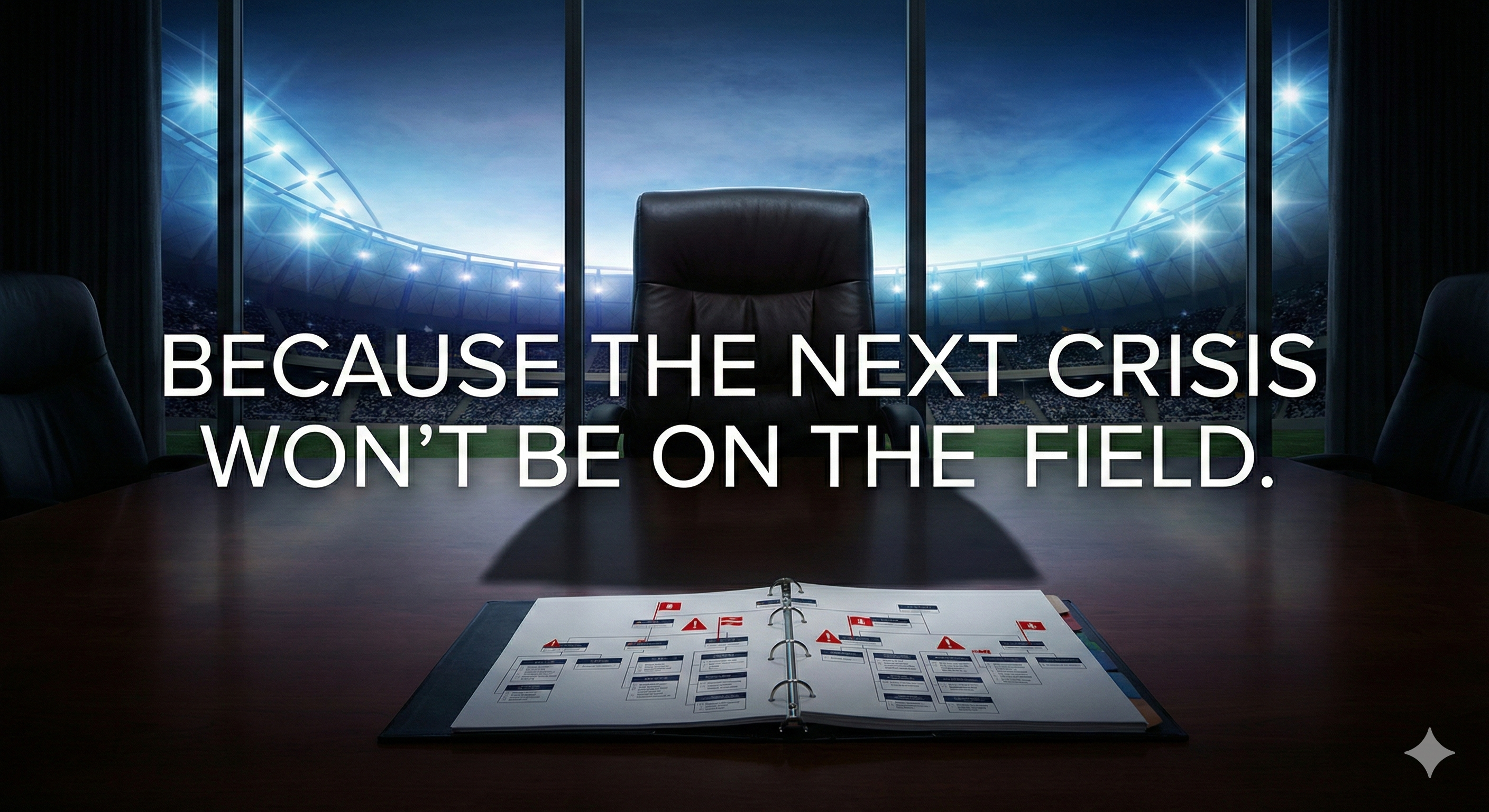
Here's what most sport CEOs don't want to hear:
<b>Your governance structure is probably broken.</b>
And the worst part? You won't realise it until it's too late.
Look at FIFA. For <i>decades</i>, they operated in the shadows. Corruption, wire fraud, racketeering, money laundering—the list goes on. Fourteen officials were arrested in May 2015. The organisation that governed the world's most popular sport became synonymous with scandal. By December that year, 16 more officials, including two FIFA vice-presidents, were arrested on similar corruption charges.
The truth is, <b>FIFA knew there were problems.</b> They chose to ignore them.
The International Olympic Committee? Same story. Bribery scandals involving the 2016 Olympics in Brazil, investigations into nine members accused of taking bribes. The 1998 Salt Lake City Winter Olympics bribery scandal forced comprehensive reforms. Sérgio Cabral, the former governor of Rio de Janeiro, admitted to paying $2 million to the former president of the International Amateur Athletic Federation to buy votes to select Rio as the 2016 Olympic host city.
USA Gymnastics provides perhaps the most heartbreaking example. Larry Nassar sexually abused hundreds of young athletes while working as a team doctor, and the FBI failed to launch formal investigations into allegations. Simone Biles testified to Congress, stating "I believe without a doubt that the circumstances that led to my abuse and allowed it to continue are directly the result of the fact that the organisations created by Congress to oversee and protect me as an athlete, USA Gymnastics and the United States Olympic and Paralympic Committees failed to do their jobs".
And it's not stopping. Just this week, federal prosecutors secured indictments against 26 people accused of rigging college basketball games in America and pro contests in China. The point-shaving scheme involved more than 39 players on more than 17 different NCAA Division I teams and more than 29 fixed games for millions of dollars in bets.
All these organisations <i>eventually</i> reformed. But only after the crisis hit. Only after the arrests. Only after the headlines. Only after the victims testified.
<b>That's reactive governance.</b>
And it's costing the sport industry its credibility—and, more importantly, the safety and wellbeing of the athletes these organisations exist to serve.
<h2>The Pattern Is Clear—and It's Systemic</h2>
Think of governance like maintaining a building.
You can fix the small cracks now—invest in inspections, patch the walls, reinforce the foundation.
Or you can wait until the ceiling collapses.
Some individual sports organisations have embarked on governance reform processes, usually after encountering a crisis. FIFA, cycling's UCI, and athletics' IAAF all made significant changes—but only <i>after</i> the damage was done.
But here's what makes this pattern so dangerous: these weren't isolated incidents. They were <i>systemic failures</i> enabled by governance structures designed to protect institutions rather than athletes.
<h2>The Science Behind the Failures</h2>
Contemporary sport governance research has identified something critical: good governance isn't about ticking boxes or writing policies no one reads.
It converges on three core dimensions:
<ol>
<li> <b>Transparency</b> — who knows what</li>
<li> <b>Democracy and participation</b> — who gets a voice </li>
<li> <b>Accountability</b> — who answers to whom</li>
</ol>
When organisations like FIFA, the IOC, and USA Gymnastics failed, they didn't fail in just one area. They failed across all three dimensions simultaneously. Information was hidden. Stakeholders—especially athletes—had no meaningful voice. And when things went wrong, no one was held accountable.
The HP Systems Readiness Scorecard operationalises these dimensions in a performance context. It's not about compliance theatre. It's about leadership alignment, scalable systems, and athlete protection—the operational reality of transparency, participation, and accountability.
Because here's the truth: <b>you can't separate performance from governance.</b> They're the same system.
In the USA Gymnastics case, Nassar thrived in a loose governance model where the USOC had minimal interactions with him and deferred to USAG, which in turn permitted Nassar to create a personal fiefdom where he wrote the rules and set the tone for medical treatment for close to 20 years. USAG engaged in essentially no oversight of Nassar throughout the lengthy period of his serial sexual assault of gymnasts.
Between 1996 and 2006, USAG received sexual abuse complaints filed against 54 coaches. The organisation banned 37 of them from gymnastics, but allowed others—including some convicted of crimes—to continue coaching.
Let that sink in: <b>convicted sex offenders were allowed to keep coaching.</b>
<b>Why?</b> Because the governance systems weren't designed for athlete protection. They were designed for institutional preservation.
The question every CEO should be asking:
<b>Why are we waiting for the crisis?</b>
<h2> The Cost of Waiting—It's Higher Than You Think</h2>
Here's what happens when you avoid governance reform:
<h3> 1. Reputational Damage That Never Fully Heals</h3>
FIFA will find it difficult to overcome its negative image of an organisation that resists reform. Even with new leadership and reform packages, the stain remains. Years later, the organisation is still synonymous with corruption in the minds of fans and stakeholders.
Your organisation's reputation is built over years. It can be destroyed in days. And in the age of social media and 24-hour news cycles, that destruction is amplified and permanent.
<h3> 2. Regulatory Pressure From All Sides </h3>
Governments are no longer standing on the sidelines. In July 2016, the UK Sports Minister warned that England's Football Association would face withdrawal of government funding if it didn't engage in institutional reform.
Following the Nassar scandal, Senators Jerry Moran and Richard Blumenthal opened an investigation into USA Gymnastics, the US Olympic Committee and Michigan State University, introducing the Empowering Olympic and Amateur Athletes Act of 2019.
When you don't reform proactively, *someone else will do it for you.* And their timeline won't be yours. Their priorities won't be yours. Their methods certainly won't be yours.
<h3> Understanding the Carrot and the Stick</h3>
Here's what's interesting about modern governance enforcement: it's not just about punishment anymore.
Research shows that governance regimes work best when they use <b>both sticks and carrots</b>. The stick is funding conditions, legal duties, and oversight bodies. The carrot is capacity-building, support, and shared tools that help organisations actually improve—not just tick boxes.
UK Sport's Code for Sports Governance is a stick: meet these standards or lose funding. But organisations that treat it as just compliance miss the point. The real opportunity is using governance frameworks as a catalyst for <i>performance improvement</i>, not just risk mitigation.
That's where tools like the HP Systems Scorecard become strategic. They help you move beyond "are we compliant?" to "are we actually better?" They transform governance from a defensive posture into a competitive advantage.
<h3> 3. Financial Consequences</h3>
The numbers are staggering. In 2021, USA Gymnastics agreed to pay hundreds of female survivors $380 million to settle their claims. The Justice Department settled with 139 victims for $138.7 million arising from the FBI's failure to conduct an adequate investigation.
That's over half a billion dollars. For smaller or growing sporting organisations—many of which are athlete-funded—this kind of exposure could be existential.
<h3> 4. Loss of Autonomy—But Not the Way You Think</h3>
States are stakeholders in the sporting sector and major contributors to the budgets of sporting associations. The more you resist internal change, the more external forces will impose it.
UK Sport and Sport England published "A Code for Sports Governance" that governing bodies must adopt to receive public funding, imposing specific governance principles and rules affecting the institutional make-up of sports regulators.
But here's what many CEOs misunderstand: <b>autonomy isn't absolute anymore.</b>
Recent research shows that the old notion of sport organisations operating in complete independence is giving way to a model of <i>conditional autonomy</i>. You retain decision-making freedom <i>where you demonstrate robust governance and respect fundamental rights</i>.
This is actually good news.
It means that proactive, high-performance governance systems aren't just risk mitigation—they're how you protect <i>meaningful autonomy</i> while satisfying legitimate external demands from governments, funders, and increasingly, athletes themselves.
Want to keep control of your organisation? Reform before someone else forces you to. Not because you're scared, but because you're strategic.
<h3> 5. Athlete and Fan Trust—The Most Valuable Currency</h3>
Athletes deserve better. Fans deserve better. And increasingly, they're demanding better.
At the U.S. Championships in 2019, Simone Biles called out USA Gymnastics in front of reporters: "It's hard coming here for an organisation, having had them fail us so many times".
Poor governance doesn't just hurt the boardroom—it undermines the very people your organisation exists to serve. And when those people lose trust, they walk away. Athletes choose other sports. Fans choose other entertainment. Sponsors choose other investments.
<h2> What Proactive Reform Actually Looks Like</h2>
The best part? You don't have to wait for disaster.
Proactive governance isn't about creating more bureaucracy or slowing down decision-making. It's about building resilient systems that protect everyone—athletes, staff, stakeholders, and the organisation itself.
Proactive governance means:
<b>→ Transparent decision-making processes</b>
Not just publishing board minutes, but creating genuine channels for stakeholder input and accountability.
<b>→ Participatory governance structures</b>
Here's something the research is clear on: <b>traditional, highly centralised governance models struggle with legitimacy and adaptability.</b>
Professional leagues that have introduced structured stakeholder participation—athlete commissions, players' associations, fan councils, independent athlete ombuds—show improved responsiveness and sustainability. They don't just avoid crises; they perform better.
This isn't about giving everyone a vote on everything. It's about institutionalising mechanisms that ensure the people closest to the impact have a voice in the decisions.
When we talk about HP Systems creating "alignment," this is what we mean. Not top-down alignment where everyone salutes the same direction. Genuine alignment where stakeholders have structured input, and leadership has the systems to synthesise that input into coherent decisions.
<b>→ Clear accountability structures</b>
The U.S. Commission on Olympics and Paralympics recommended creating an Inspector General who would serve as a secure point of contact for stakeholders to report mismanagement or policy violations, with semi-annual reporting to Congress to provide proactive insights.
<b>→ Independent oversight mechanisms</b>
The IOC's Agenda 2020 initiative included a Working Group on Good Governance and Autonomy, with five recommendations addressing governance and ethics, stating "All organisations belonging to the Olympic Movement to accept and comply with the Basic Universal Principles of Good Governance".
<b>→ Regular governance audits</b>
The Association of Summer Olympic International Federations developed a governance assessment tool for International Federations, with self-assessment questionnaires reviewed and published in reports in both 2017 and 2018.
<b>→ Athlete-centric policies</b>
The U.S. Center for SafeSport was created in 2017 with exclusive jurisdiction over allegations of sexual misconduct and the power to impose sanctions up to lifetime banning from involvement in all Olympic sports.
These aren't suggestions anymore. They're <i>requirements.</i>
And here's what's critical to understand: these reforms don't happen because organisations suddenly develop a conscience. They happen because the alternative—doing nothing—becomes untenable.
Some of FIFA's reforms included separating the management part of the organisation from the political, limiting terms of office, performing consistent integrity checks, and greater transparency in day-to-day operations.
But here's the question: <b>Why wait until you're forced?</b>
<h2> What Good Governance Actually Looks Like—The Positive Examples</h2>
Let's shift the narrative for a moment.
Because while the crisis stories dominate headlines, there are organisations doing governance reform <i>right</i>—proactively, thoughtfully, with measurable results.
<b>The ASOIF Governance Reviews</b> have tracked 50 International Federations across five dimensions: Transparency, Integrity, Democracy, Development, and Control. And here's what's remarkable: <b>several federations have materially improved their scores over successive review cycles.</b>
They didn't wait for a scandal. They formalised integrity systems, clarified separation of powers, increased transparency in elections and event awarding, and created structured mechanisms for athlete input.
The result? Higher performance. Greater trust. Stronger partnerships with sponsors and broadcasters. Better athlete retention.
At the national level, look at the <b>Scottish Football Association's independent review process</b>. They conducted transparent stakeholder engagement, published their governance gaps publicly, and tracked implementation progress openly.
Did it feel risky to be that transparent about weaknesses? Absolutely.
But here's what happened: trust rebuilt faster, stakeholder buy-in increased, and the organisation emerged stronger—not despite the transparency, but <i>because of it</i>.
These organisations demonstrate something critical: <b>proactive, stakeholder-inclusive reform doesn't just prevent crises. It enhances performance.</b>
When your governance systems are sound, you free up leadership bandwidth to focus on what matters: athlete development, strategic partnerships, innovation, growth.
When your governance systems are broken, you spend all your time managing crises, defending decisions, and watching talent walk out the door.
<h2> The Boardroom Is Your Next Battleground—Are You Ready?</h2>
Here's the uncomfortable truth that keeps me up at night:
The next crisis in your organisation won't be a doping scandal or a match-fixing investigation.
<b>It'll be governance failure.</b>
A board that lacks diversity and independent voices. Financial processes that lack transparency. Decision-making structures that centralise power without accountability. Reporting mechanisms that protect institutions rather than individuals.
Numerous instances of poor governance have been demonstrated in recent years, ranging from management corruption such as bribery at one extreme, through to missed opportunities due to inefficient management at the other.
The spectrum is wide. The consequences are real. And the warning signs are everywhere.
Look at what's happening right now in college sports. Leaders are frustrated at the lack of enforcement from the NCAA and College Sports Commission over allegations of tampering, eligibility rulings, and circumvention of revenue-sharing caps. The SEC is considering going its own way to create rules and a level of responsibility if enforcement doesn't improve.
When your governance is so broken that entire conferences are threatening to leave the system, you've waited too long.
<h2> Why HP Systems Are Your Competitive Advantage </h2>
This is where <b>HP Systems</b> become not just helpful, but essential.
High-performance systems aren't just about athlete development or competition results. They're about <i>organisational resilience</i>—the ability to withstand pressure, adapt to change, and protect the people who matter most.
But here's what's often misunderstood: <b>HP Systems aren't just structures and policies.</b>
They're <b>leadership routines</b>.
Regular board evaluation. Reflective learning after setbacks. Continuous stakeholder dialogue. Transparent communication about what's working and what isn't.
The UK Code for Sports Governance emphasises this in its principles on "People" and "Standards & Conduct"—governance frameworks recognise that culture and leadership behaviour are enablers of transparency, integrity, and diversity.
You can have perfect policies on paper. But if your leadership doesn't model transparency, if your board doesn't welcome constructive challenge, if your culture punishes people for raising concerns—your governance will fail.
HP Systems create:
<b>✓ Alignment</b> across leadership, staff, and stakeholders
When everyone understands the mission, the values, and the non-negotiables, you don't have rogue actors creating personal fiefdoms. You have coherent decision-making even under pressure.
<b>✓ Scalability</b> that grows with your organisation
Systems that work for 50 athletes should scale to 500. Systems that work for one location should scale to multiple. If they don't, you have a problem—not a system.
<b>✓ Transparency</b> that builds trust
Not transparency for show, but genuine openness that allows stakeholders to see how decisions are made and hold leadership accountable. This is how you maintain conditional autonomy—by demonstrating robust internal governance that makes external intervention unnecessary.
<b>✓ Accountability</b> that protects integrity
Clear lines of responsibility. Regular audits. Independent oversight. Mechanisms for reporting concerns without fear of retaliation. This isn't about punishment—it's about continuous improvement.
And here's the thing about smaller or growing sporting organisations—many are athlete-funded. That means <i>every governance failure impacts athletes directly</i>. When budgets are tight and resources are scarce, you can't afford to waste money on crisis management, legal settlements, or reputation repair.
When your systems are sound, you protect the people who matter most. You free up resources for what actually matters—developing athletes, building programmes, creating opportunities.
<h2> The Choice Is Yours—But the Clock Is Ticking</h2>
You have two options:
<b>Option 1:</b> Wait. Hope nothing goes wrong. React when crisis hits. Spend millions on settlements. Lose years rebuilding trust. Watch your best people walk away.
<b>Option 2:</b> Lead. Audit your systems. Reform proactively. Invest in governance before you're forced to. Build trust instead of rebuilding it.
The organisations that survive the next decade won't be the ones with the best PR teams or the deepest pockets for legal defence.
They'll be the ones with the best <i>governance</i>.
Think about what happened to USA Gymnastics. Since the Nassar scandal, USAG has gone through four new presidents and CEOs in 23 months. That's not leadership. That's chaos.
Or consider FIFA. Although FIFA president Sepp Blatter was not initially named in the criminal investigation, he resigned shortly after being re-elected for a fifth term, and further investigations resulted in suspensions and bans for several FIFA executives including Blatter, Michel Platini, and Jérôme Valcke.
Years of institutional knowledge, gone. Strategic priorities, disrupted. Stakeholder relationships, damaged. All because governance reform was avoided until it was too late.
<h2> What's Your Starting Point? You Can't Fix What You Don't Measure</h2>
You can't fix what you don't measure.
That's why we created the <b>HP Systems Readiness Scorecard</b>—a tool designed to give you a quick, clear, honest assessment of where your organisation stands right now.
It evaluates:
<b>→ Leadership alignment</b>
Does your leadership team share a common vision? Are decisions made collaboratively or dictatorially?
<b>→ Governance structures</b>
Do you have independent oversight? Are there clear reporting channels? Can people raise concerns without fear?
<b>→ Financial transparency</b>
Can stakeholders see how money flows through your organisation? Are budgets published? Are decisions documented?
<b>→ Athlete protection</b>
Do you have safeguarding policies? Are they enforced? Do athletes know how to report concerns?
<b>→ Scalability and resilience</b>
Will your systems hold up as you grow? Can you weather a crisis without collapsing?
<b>No fluff. No assumptions. Just data.</b>
Because the truth is, you already know if something feels off. You already sense where the vulnerabilities are. The scorecard just helps you see it clearly—and gives you a roadmap to fix it <i>before</i> the world does it for you.
<h2> What Comes After the Scorecard? The Path Forward</h2>
Once you understand where you stand, the work begins. And that work looks different depending on where your organisation is in its journey.
<b>If you're building or rebuilding</b>, you need a coherent system that aligns performance, governance, and funding. You need decision rights that don't change every time leadership does. You need an operating model that remains stable through leadership transitions and performance volatility. Most importantly, you need a prioritised roadmap—not a wish list, but a realistic plan for the next performance or Olympic cycle.
This is the foundation work. It's not glamorous, but it's essential. Without it, everything else is built on sand.
<b>If you're navigating new risks</b>, particularly around AI and data governance, you need more than good intentions. You need clear guardrails that your board can actually stand behind. You need defined accountability when AI influences decisions about athlete selection, funding allocation, or performance analysis. You need alignment with ethical standards, regulatory requirements, and—most critically—athlete-centred expectations.
The organisations getting this right aren't winging it. They're building practical governance artefacts that boards and executives can use to make confident decisions without introducing unmanaged risk.
<b>If you're facing a critical decision right now</b>, you need someone outside the system. Someone who's seen these situations before. Someone who can provide trusted, independent counsel when performance, governance, and reputation intersect. A sounding board that helps you think through system-level issues that don't fit neatly into committees or programmes. Continuity of judgment across performance cycles and leadership transitions.
Because here's what no one tells you about governance crises: <b>they're lonely.</b> You can't crowdsource these decisions. You can't delegate them. And the people inside your organisation—no matter how talented—often can't see the full picture because they're too close to it.
<h2> Reform Now, or Regret Later—The Evidence Is Overwhelming</h2>
The FIFA scandal didn't happen overnight. Neither did the IOC's troubles. The Nassar abuse wasn't a sudden occurrence—it was nearly two decades of sexual abuse of hundreds of victims under the guise of performing medical treatments.
They were years in the making—ignored warnings, dismissed concerns, delayed action.
In 2015, USA Gymnastics President Steve Penny said in a deposition, "To the best of my knowledge, there's no duty to report if you are a third-party to some allegation". That mindset—that we're not responsible, someone else will handle it—is the foundation of governance failure.
Don't let that be your story.
The organisations that are thriving today aren't the ones that never faced challenges. They're the ones that faced them head-on, reformed proactively, and built systems that protected everyone.
<b>Take the HP Systems Readiness Scorecard today</b> and get a personalised recommendation based on your organisation's current position. Whether you need to build foundational systems, address emerging governance risks, or navigate high-stakes decisions, you'll get clarity on your next steps.
Because governance reform isn't optional anymore.
<b>It's survival.</b>
The athletes you serve deserve systems that protect them. The staff you employ deserve clarity and accountability. The stakeholders who support you deserve transparency. And you—as a leader—deserve to build something that lasts.
The next crisis is coming. The only question is whether you'll be ready.
<b>Ready to lead, not react?</b>
<a href="https://glenviewsports.co/scorecard">Take the HP Systems Readiness Scorecard</a>
<b>Because the truth is simple: Great systems elevate people. Poor systems destroy them.</b>
<h3>References & Further Reading</h3>
<b>Governance Frameworks:</b>
<ul>
<li> Geeraert A, Van Eekeren F (eds). <i>Good Governance in Sport: Critical Reflections</i>. Routledge/OAPEN, 2021.</li>
<li> ASOIF Governance Task Force. <i>Recommended Key Governance Principles and Basic Indicators</i> (Transparency, Integrity, Democracy, Development, Control).</li>
<li>UK Sport & Sport England. <i>A Code for Sports Governance</i>, 2016.</li>
</ul>
<b>Stakeholder Participation:</b>
<ul>
<li> Hu Y. "Exploring the dynamics of governance: An examination of traditional and innovative models in professional sports leagues." <i>Frontiers in Sports and Active Living</i>, 2024.</li>
</ul>
<b>Implementation Research:</b>
<ul>
<li> Koutsioundas V. <i>The Carrot or the Stick? Implementing Good Governance in International Sports Organisations</i>. PhD dissertation, 2024.</li>
</ul>
<b>Autonomy of Sport:</b>
<ul>
<li>García B, Meier HE. "The autonomy of sport: a scoping review." <i>Frontiers in Sports and Active Living</i>, 2025.</li>
</ul>
<b>Reform Examples:</b>
<ul>
<li>ASOIF. <i>Progressing Towards Better International Federation Governance</i> and <i>Fourth Review of IF Governance</i> (50 indicators).<l/i>
<li> Sports Think Tank. "<i>Leadership insights on governance in sport – The case for good governance</i>" (Scottish FA reform case).</li>
</ul>